03
Backup Generators and U.P.S. Systems
U.P.S. systems for the gap between the outage and the generator, and backup generators sized off the building's real load, from the pad to the transfer switch.
Chapter 01
U.P.S. systems: the gap between the outage and the generator.
A generator does not start instantly, and a building does not stop needing power in the meantime. A U.P.S. system is what covers that gap. It picks up the load the moment utility power drops and holds it until the generator is up, synchronized and ready to carry it.
That is what a U.P.S. is for, and it is also the limit of what it is for. It is not a backup power plant. It is a bridge, sized for the load it has to carry and the seconds it has to carry it, and the generator is what takes over from there. Sizing one correctly means knowing the real load it protects, not a rounded-up guess.
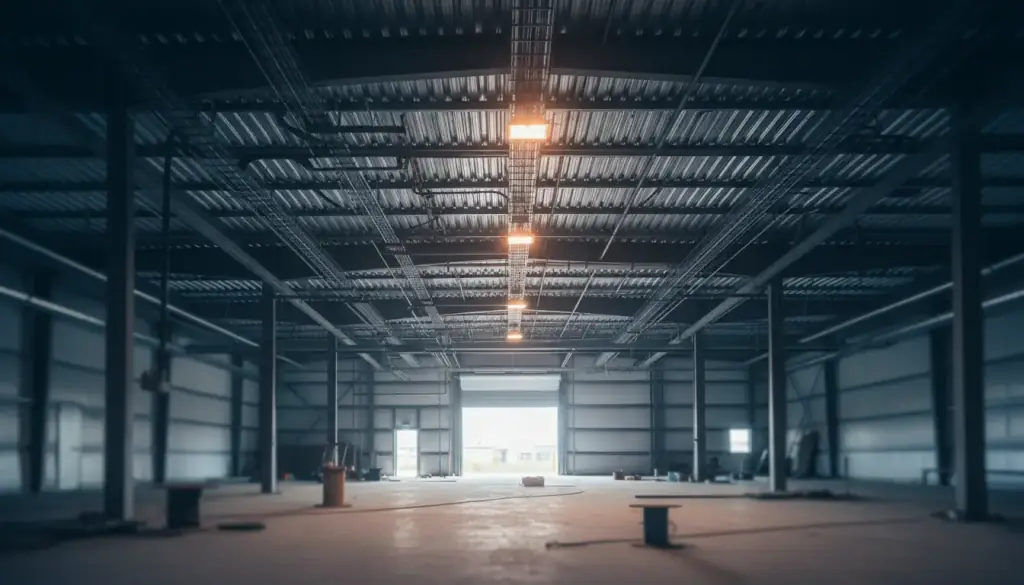
Industrial interior lit by its own high bay fixtures, cable tray and conduit running the length of the deck
Backup generators, from pad to transfer switch.
"U.P.S. systems" and "backup generators" are both work we take on, and on a commercial or industrial building they are almost always planned together. The generator is sized off the building's actual load, not a nameplate figure, because a machine sized for the wrong number either can't carry the building or sits oversized and inefficient for the rest of its life.
The transfer switch is what decides how the handoff happens: which loads move to standby power, in what order, and how the building comes back to utility power once it returns. Placement and wiring of the switch is as much a part of the job as the generator itself, and it is where a design decision made early either makes the rest of the installation straightforward or turns it into a rework.
Chapter 03
The handoff is where standby power fails.
A generator that runs fine on a test and a generator that actually saves the building during a real outage are two different questions. The part that fails is almost never the engine. It is the handoff: the timing between utility power dropping and standby power picking it up, and whether the loads that are supposed to ride through actually do.
That is why we think about the transfer as its own piece of the job, not an afterthought once the generator is set. What rides through without interruption, what is allowed to reboot, and what the sequence looks like when utility power comes back, all get planned before the building ever loses power for real.
Commissioning and the record you keep.
A standby system that has never been proven under real load is a guess with a warranty sticker on it. Commissioning is where that guess gets tested: the generator carrying the load it was sized for, the transfer switch doing the handoff in both directions, and the results written down rather than assumed.
That written record is what the building keeps afterward, and it is what an insurer, an inspector or the next electrician who touches the system will ask to see. We treat it as part of the job, not paperwork tacked on at the end.
Lone Star Electric — Local and state licensed. Insured and bonded. Call 817-335-8044.