Preventive Maintenance on Switchgear: What an Annual Look Should Cover
The switchgear that fails without warning is almost always the switchgear nobody had looked at in years.
September 4, 2026 · 3 min read
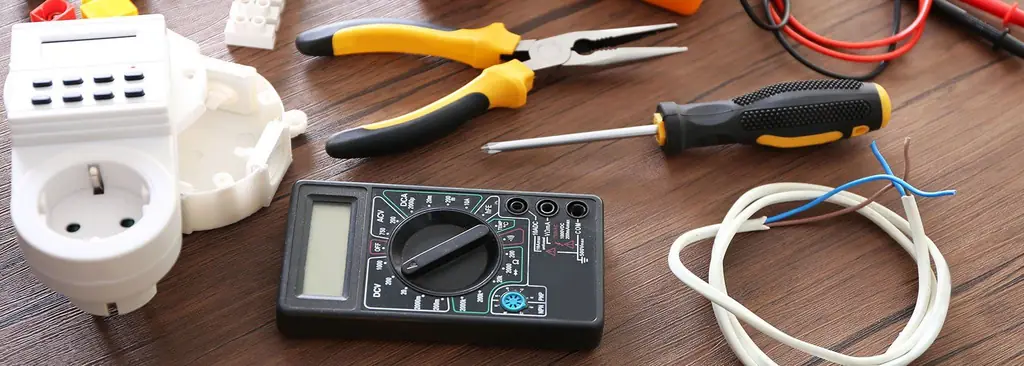
Most of the urgent service calls we get share the same story underneath them: equipment that hadn't been inspected in a long time, and a problem that had been building quietly the whole time. Switchgear and distribution equipment don't usually fail out of nowhere. Connections loosen from thermal cycling, insulation degrades from heat and age, and small issues sit unnoticed until the equipment is under enough load to push them past the point of no return. An annual look catches that while it's still a maintenance item instead of a shutdown.
A service call is not the same as maintenance
There's a real difference between our service department responding to a problem that's already happened and a scheduled inspection that's looking for the problem before it happens. Both matter. New installations, repairs, and maintenance are all part of what our service department handles, along with bucket truck availability for exterior work like parking lot and site lighting, poles, and service masts that need to be reached from height. But maintenance is the piece that actually reduces how often the service call happens in the first place.
What we actually check
A proper annual inspection isn't a walk-through with a flashlight. Torque checks on connections catch the loosening that thermal cycling causes over time, because a connection that's backed off even slightly runs hotter than it should, and heat is what eventually takes equipment out. A thermal survey of the gear finds hot spots before they turn into failures, often catching a problem weeks or months before it would otherwise announce itself. Cleaning matters more than it sounds like it should, because dust and debris inside enclosures affect how equipment sheds heat and can create paths for arcing that shouldn't exist. We also check the condition of protective devices, because a breaker that doesn't trip correctly under fault conditions is a hazard hiding behind equipment that otherwise looks fine.
Clearances and access matter as much as the equipment itself
Part of what we look at on any inspection is whether the working space around switchgear still meets the clearances it needs. Buildings change over the years. Storage gets pushed up against equipment it shouldn't be near, and access that used to be clear gets blocked. That's not just a maintenance issue, it's a safety issue for anyone who has to open that gear later, whether it's a scheduled service visit or an unplanned one.
What we document and hand back to you
A useful inspection ends with a written record, not just a verbal all clear. That documentation becomes the baseline for next year's inspection and the reference point if something does come up between visits. It also gives whoever manages the building a real answer when someone asks when the gear was last looked at and what was found.
The gear that gets skipped is the gear that fails
The equipment we see fail hardest is almost never the equipment that gets attention. It's the panel in the back of a mechanical room that nobody walks past, the switchgear feeding a part of the building that hasn't changed tenants in a decade, the distribution equipment that's been running fine for so long it stopped being anyone's concern. That equipment doesn't stop needing maintenance just because it's been quiet. If anything, gear that's gone the longest without an inspection is the gear most likely to be carrying a connection issue or a thermal problem that's had years to develop instead of months. An annual schedule that covers everything, not just the equipment someone happens to remember, is what actually catches that.
- Torque checks on connections to catch loosening before it turns into heat damage
- Thermal survey of the gear to find hot spots before they become failures
- Cleaning, protective device condition, and a check on working clearances around the equipment
Lone Star Electric has been maintaining commercial and industrial electrical equipment in Fort Worth and across the Dallas Metroplex since 1970, fifty six years under Texas Master Electrician License #4993 and Texas Contractors License #17204. If it's been a while since your switchgear was actually inspected rather than just running, call 817-335-8044, Monday through Friday, 7:00 am to 4:30 pm, and have the address of the equipment and anything you've noticed recently ready when you call.
Lone Star Electric — 817-335-8044
Call 817-335-8044More articles
What Actually Goes Wrong in a Commercial Service Entrance
The service entrance is the one part of a building nobody thinks about until something downstream stops working right.
Backup Generators and UPS: What Each One Actually Covers
A UPS and a generator solve two different problems, and the gap between them is where most standby power plans fall apart.